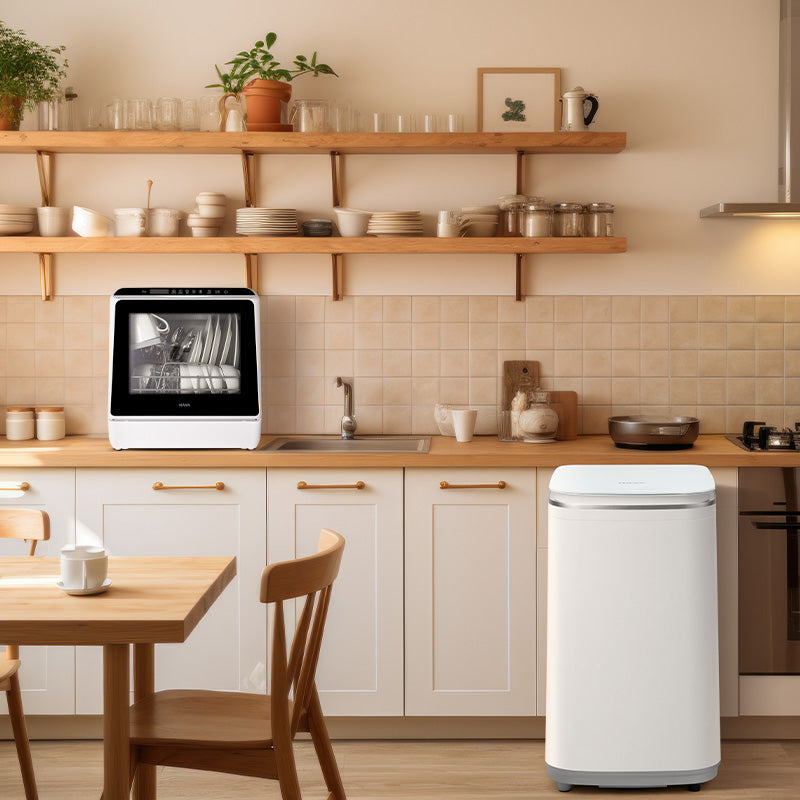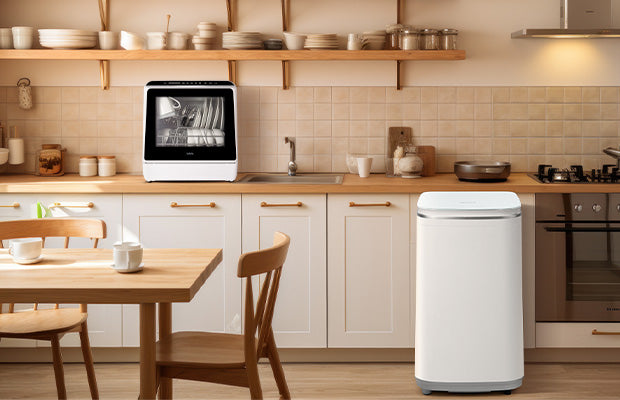
A countertop dishwasher can be installed without a plumber, usually in under 15 minutes. Depending on the model and where you place it, you can either fill the built-in water tank or connect the appliance directly to a tap.
If you don't have a tap within reach or you're renting your home, the water tank option is especially flexible and easy to use. Both methods are explained step by step below.
Installing a Countertop Dishwasher: Running It on a Water Tank

Countertop dishwashers with a built-in water tank don't need a fixed water connection. You fill them by hand, and the waste water drains through the drain hose into the sink or a bucket.
Step 1: Choose a suitable spot
Place the countertop dishwasher on a stable, level surface. The drain hose needs to be able to reach the sink or a collection bucket without difficulty. The socket should be nearby, but not directly above the sink.
Step 2: Position the drain hose correctly
Run the drain hose into the sink or into a bucket set up for this purpose. Make sure the hose isn't kinked or squashed, as this can block the water flow and cause the dishwasher to stop draining properly. The hose needs to stay securely in place during the cycle and shouldn't slip.
Step 3: Fill the water tank
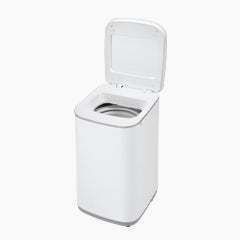
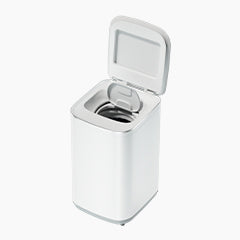
On most countertop dishwashers, the fill opening is on the top of the unit. If there isn't enough clearance between the appliance and a wall cabinet above it, pull the machine forward slightly before filling.
Fill the tank with clean tap water. Since the tank isn't visible on most models, a beep will let you know once you've added enough water.
Step 4: Run a test cycle and check for leaks
Plug the appliance into the socket. Select a wash programme and run a test cycle without any dishes inside. During this first run, check that the drain hose is properly positioned and that no water is leaking out. After that, the appliance is ready to use.
Installing a Countertop Dishwasher: Connecting Directly to the Tap
Countertop dishwashers with a direct water connection draw water automatically from the mains and drain it out through the drain hose. There's no need to fill a tank by hand.

Step 1: Connect the inlet hose correctly
Attach the inlet hose securely to the tap and connect the other end to the water inlet at the back of the appliance. Make sure the hose isn't kinked and has enough slack to move freely.
Step 2: Position the drain hose correctly
Run the drain hose into the sink or into a bucket set up for this purpose. Make sure the hose stays securely in place during the cycle and can't slip out. Running it too high can put extra strain on the drain pump.
Step 3: Run and check a test cycle
Turn on the tap, plug the appliance into the socket, select a wash programme and run a test cycle without any dishes inside. Check all the connections for leaks and make sure no water is escaping anywhere. After that, the appliance is ready to use.
Note: if the inlet hose doesn't fit your tap thread directly, universal adapters for the most common tap sizes are available at hardware shops or online.
Frequently Asked Questions About Installing a Countertop Dishwasher
How long does it take to install a countertop dishwasher?
Running it on a water tank, a countertop dishwasher is ready to use within minutes: fill the tank, position the drain hose correctly, plug it in, and you can start the wash cycle. No plumber is needed.
Connecting it directly to the tap takes a little longer, since the inlet hose has to be properly fitted to the tap. Even so, a plumber usually isn't required, and setup can typically be finished in around 15 minutes.
Can I use a countertop dishwasher without a water connection?
Yes. Countertop dishwashers with a built-in water tank work entirely without a fixed water connection and only need mains power. The tank is filled by hand, and waste water drains out through the drain hose into the sink or a bucket. The HAVA R09 supports both options: running on a water tank or connecting directly to the tap. This flexibility is particularly handy for rented flats, small kitchens or shared houses.
What should I do if the countertop dishwasher leaks after installation?
First check all the connection points: the inlet hose at the tap, the inlet hose at the appliance, and the drain hose in the sink. If a connection isn't tight, retighten it and test again. If water is coming from the appliance itself, you'll find possible causes and fixes in our guide Dishwasher Leaking From the Bottom.
Can I put a countertop dishwasher under the sink?

Generally, yes. Most countertop dishwashers have a built-in drain pump that can also push water upward. Before buying, check the maximum pump height the model you're considering supports. It's also worth measuring the available space under the sink beforehand, the width, depth and height all need to be enough for the appliance to slide in without trouble.
Summary
A countertop dishwasher is easy to install without a professional, whether you're running it on a water tank or connecting it directly to the water supply. On a water tank, only a few steps are needed: fill the tank, position the drain hose correctly, and plug the appliance into the socket. There's no need for a fixed water connection or any building work. Connecting directly to the tap is just as quick to set up, and in this case there's no need to fill a tank by hand.
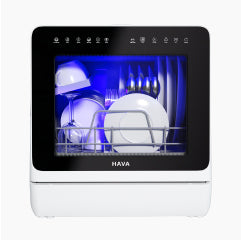
If you're after a countertop dishwasher that supports both options, the HAVA countertop dishwasher is a particularly flexible choice: it has a built-in 5-litre water tank, an optional tap connection, and needs no fixed installation.