Finding water under your dishwasher is worrying at first. In many cases, however, the cause is not a serious fault. The most common reasons a dishwasher leaks from the bottom are a damaged door seal, incorrect installation, too much detergent, or a problem with the drainage system.

In this article, we walk you through step by step how to identify the most common causes of a dishwasher leaking underneath and how to fix them yourself in many cases. You will also find specific advice for owners of a countertop dishwasher.
Where Is the Water Coming From? How to Identify the Cause Quickly
Before you start troubleshooting, take a look at where exactly the water is coming from:
- Water is coming out of the door during the wash cycle: check the door seal and the amount of detergent you are using first.
- Water is pooling under the machine after a cycle: inspect the filter, drain hose and connections.
- Water is leaking even when the machine is switched off: this may indicate a faulty water inlet valve. Contact customer service in this case.
Step 1: External Causes That Make a Dishwasher Leak
The most common causes of a dishwasher leaking can often be identified with simple checks. Start with these points before investigating further.
Check the Door Seal
The door seal is the first thing to check when a dishwasher is leaking. Open the appliance door and examine the rubber seal around the door frame carefully for cracks, deformation, deposits or signs of wear.
If food residue or dirt is stuck to the seal, wipe it down with a damp cloth. If the seal is damaged or has lost its shape, it will no longer provide a reliable watertight fit and should be replaced. When ordering a replacement, make sure you have the exact model name of your appliance to hand.
Check the Installation Position and Levelling
If the dishwasher is not level, water can distribute unevenly during the wash cycle and escape through the bottom of the door. Use a spirit level or a spirit level app on your smartphone to check whether the appliance is sitting flat.
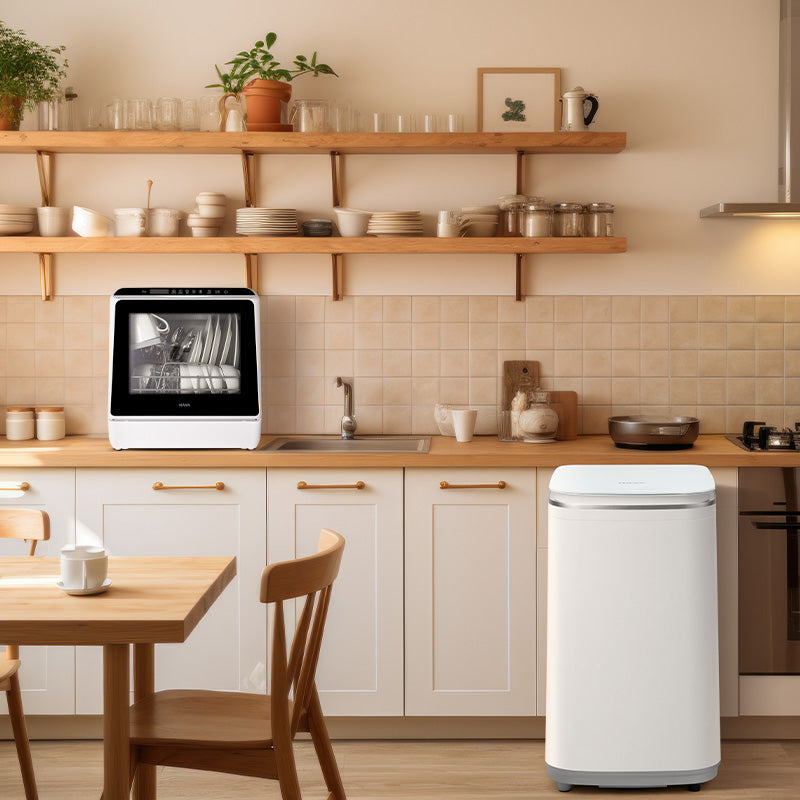
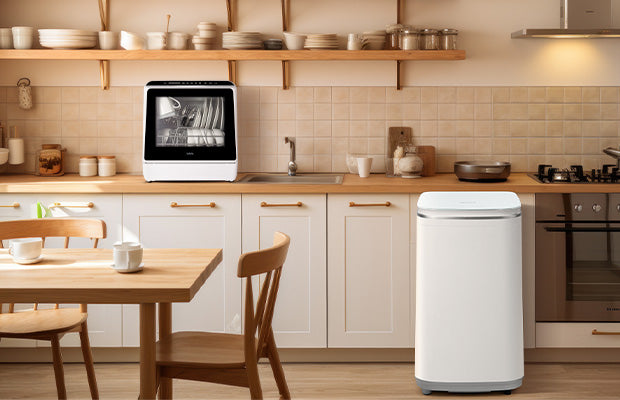
For countertop dishwashers, it is particularly important that the appliance is placed on a stable, flat surface. Incorrect positioning can not only affect washing performance but also influence how water is distributed inside the machine.
Check the Detergent Amount

Too much detergent is a frequently overlooked cause of dishwasher leaks. Excessive foam build-up can cause the water-and-foam mixture to spill out through the door area during the wash cycle.
Only use detergent specifically designed for dishwashers and stick to the recommended dosage. Washing-up liquid is not suitable, as it produces far more foam and can interfere with the machine's operation.
Step 2: Check the Drainage System – a Common Cause When Water Leaks from the Bottom
If the external factors appear normal, the drainage system should be checked next. Blockages, incorrectly fitted filters or leaking connections can all cause water to escape and collect beneath the appliance.
Check the Filter
An incorrectly fitted or blocked filter can cause the water in the dishwasher not to drain properly or to spill out sideways. Remove the filter from the bottom of the interior and check that it is fully inserted and securely locked in place.
Rinse the filter under running water and remove any deposits or food residue. A clean, correctly fitted filter ensures that water is reliably channelled into the drainage system.
Check the Hoses and Connections
Pull the dishwasher out carefully and inspect the hoses at the back of the appliance. Look for cracks, worn patches, kinks or loose connections.
Check both the drain hose and the inlet hose, as water escaping at the connections can collect under the appliance and look like a leak from the bottom.
Check for Backflow in the Drain
If the drain under the sink or the household drain is blocked, waste water from the dishwasher cannot flow away freely and backs up. Water can then escape under the appliance even though the dishwasher itself is not damaged.
Check that the drain is clear. This point is only relevant if the drain hose is connected to a fixed waste outlet. For countertop dishwashers where the drain hose leads directly into a sink or a bucket, this cause does not apply.
Step 3: Internal Causes – When the Dishwasher Keeps Leaking
If all previous steps have not revealed anything unusual, the cause may lie inside the appliance. Before carrying out any further checks, make sure you disconnect the dishwasher from the mains and shut off the water supply. Only open the machine if this is permitted by the manufacturer and you feel confident doing so. If in doubt, we recommend contacting customer service.
Check the Internal Hoses and Connections

Internal hoses and connection points can also be the cause of a dishwasher leaking. Visible water marks or moisture in the lower part of the appliance may point to a failing connection or a damaged hose.
Carefully inspect any accessible areas for cracks, loosened connections or unusual moisture. Even minor damage can allow water to enter the interior of the appliance and collect beneath the machine.
Check the Inlet Valve
If the dishwasher is leaking even when switched off, or if water collects inside the machine without any wash cycle running, the cause may be a faulty water inlet valve. A valve that does not close fully can allow water to continuously enter the appliance and cause it to overflow.
The inlet valve is located in the lower part of the appliance and is often not accessible without opening the casing. As replacing it is technically demanding, this repair should in most cases be left to a qualified technician or the manufacturer's service team.
Countertop Dishwasher Leaking: What to Check
A countertop dishwasher is considered to be leaking when water escapes from underneath the appliance, through the bottom of the door, or from around the water tank. Countertop dishwashers share many of the same causes of leaks as built-in models. However, due to the compact design, the integrated water tank and the flexible positioning, there are some additional causes that tend to occur specifically in smaller machines with a water tank and are often overlooked.

Water Tank Overfilled
If the water tank is filled beyond the maximum fill line, water can escape from the filling area and collect beneath the appliance. In this case, the issue is not a technical fault but an overfilling error.
Only fill the tank up to the marked maximum level and make sure the filling opening is properly closed after filling, before switching the appliance on.
Drain Hose Displaced or Incorrectly Positioned
On countertop dishwashers, the drain hose is often placed flexibly into a bucket or over the edge of a sink. If the hose shifts during the wash cycle or is not properly secured, water can spill onto the worktop or the floor.
This does not necessarily indicate a fault with the appliance. Secure the drain hose so that it is firmly in position and cannot move during operation.
Excessive Foam from Wrong Detergent or Overdosing
Countertop dishwashers have a smaller interior than built-in models. Excessive foam build-up can disrupt the normal flow of water and cause a water-and-foam mixture to escape through the door area.
Only use detergent specifically designed for dishwashers and stick to the recommended dosage. Washing-up liquid and other unsuitable cleaners should not be used, as they can very quickly cause excessive foaming.
Frequently Asked Questions: Dishwasher Leaking from the Bottom
Why Is My Dishwasher Leaking from the Bottom?
The most common causes are a damaged or dirty door seal, incorrect installation, excessive foam from an overdose of detergent, and problems in the drainage system such as a blocked filter or a kinked drain hose. In many cases, the cause can be identified and fixed without professional help by working through the checks systematically from the outside in.
What Should I Do If My Dishwasher Is Leaking Underneath?
Start by disconnecting the appliance from the mains and mopping up the water that has escaped. Then work through the checks in order: the door seal, the installation position and the detergent amount. If none of these reveal anything unusual, inspect the filter, drain hose and connections. A detailed step-by-step guide is available earlier in this article.
Can I Fix a Leaking Dishwasher Myself?
In many cases, yes. Dirty door seals can be cleaned, and damaged seals can be replaced on most models. A blocked filter, a displaced drain hose or too much detergent can also often be resolved without professional help. However, once internal components such as the inlet valve or internal hoses are involved, we recommend contacting customer service.
When Should I Call a Technician for a Leaking Dishwasher?
A technician is the right call when all external and drainage-related causes have been ruled out and the appliance is still leaking. A faulty inlet valve, damaged internal hoses or recurring leaks are also situations where a professional should be brought in.
Summary
A dishwasher leaking from the bottom sounds like a serious problem, but in many cases it can be resolved with straightforward checks. The door seal, installation position, detergent amount and drainage system are among the most common causes and can usually be inspected and fixed without calling a technician.
Work through the checks systematically: from the outside in, from the simple to the complex. Approaching the diagnosis in this order means the cause can be found quickly in many cases, avoiding unnecessary call-out costs.
To prevent future leaks, cleaning your dishwasher regularly helps to remove deposits from the seals and drainage system before they become a problem.