A modern dishwasher uses between 10 and 15 litres of water per cycle, which can make it considerably more economical than washing up by hand under normal use. When it comes to time, running costs and hygiene too, a dishwasher usually comes out ahead.
The answer isn't quite that simple, though: with very small amounts of washing-up, doing it by hand can be the more practical choice. The following comparison sets out the actual figures for water, energy, time and cost, and makes clear when each method is genuinely cheaper.
How much water do a dishwasher and washing up by hand use?

A dishwasher's water use depends on its age and model. Older machines without modern efficiency technology often use 20 litres or more per cycle. Current built-in models typically need between 10 and 15 litres, while countertop dishwashers, thanks to their smaller capacity, often manage with around 4 to 6 litres.
When washing up by hand, usage depends heavily on whether you wash under a running tap or in a filled bowl. Washing under running water pushes consumption up quickly. A standard tap typically delivers around 6 litres a minute or more. Over a typical 5 to 10-minute wash, that can add up to 30 to 60 litres of water, considerably more than even a built-in dishwasher needs for a full cycle.
If you wash up in a filled bowl instead, consumption can be reduced to around 10 to 15 litres. That's similar to a modern built-in dishwasher, but still clearly above what many countertop dishwashers use.
The key difference: a dishwasher's water use is more predictable, since it depends on the programme and the appliance, whereas washing up by hand depends mainly on your own habits.
Water use: dishwasher vs washing up by hand compared
| Appliance type | Water use per cycle |
| Built-in dishwasher | approx. 10—15 litres |
| Countertop dishwasher | approx. 4—6 litres |
| Washing up by hand | approx. 15—30 litres |
Cleaning and hygiene: which method is more thorough?
Alongside water use, cleaning performance also plays an important role when comparing a dishwasher with washing up by hand.
Modern dishwashers clean at temperatures between 55 and 75°C, depending on the programme. At these temperatures, most bacteria and germs are reliably killed off. When washing up by hand, water temperature tends to be considerably lower for comfort, since water that hot would be almost unbearable on your hands.

On top of that, a dishwasher runs through several cleaning stages. A pre-rinse, main wash and final rinse work together to loosen grease and food residue thoroughly and then rinse it away. When washing up by hand, the result depends much more on how you go about it, for example how often you change the water and how thoroughly you rinse.
Another difference is drying. Dishwashers dry dishes mainly using hot air or residual heat, so there's no need to dry up with a tea towel. When washing up by hand, dishes are often dried with a cloth, which can spread germs itself if it isn't changed regularly.
Still, washing up by hand has its advantages: with just a few items or delicate crockery, it's often quicker and gentler to do it by hand than to wait for a full programme to finish. For regularly washing larger quantities, though, a dishwasher offers more even cleaning and better hygiene.
Time: which method saves more?
When it comes to time, it depends on whether you count the total cycle time or just your own active time. A dishwasher typically takes between one and three hours depending on the programme, but the active time spent loading and unloading is only a few minutes.
Washing up by hand means doing the whole process yourself: running the water, cleaning the dishes, rinsing and then drying. Depending on how much washing-up there is, a full wash-up typically takes 10 to 20 minutes and needs your full attention throughout.
A dishwasher saves the most time when larger amounts of washing-up build up regularly. Once it's loaded, the programme starts automatically while you get on with something else. This time saving is particularly noticeable over the course of a week in families or households that cook every day.
For a single plate, a glass or a few pieces of cutlery, though, washing up by hand can be quicker. In those cases, it's often not worth loading the dishwasher and waiting for a full cycle.
Cost comparison: dishwasher or washing up by hand?

Alongside water use, hygiene and time, many households also care about another question: which method works out cheaper in the long run? At first glance, washing up by hand looks cheaper, since there's no dishwasher to buy. In everyday use, though, the cost difference comes down mainly to water use and the energy needed to heat it.
Water costs
With an average UK water and wastewater rate of around £3.30 per cubic metre, a dishwasher's water costs stay relatively low.
A modern built-in dishwasher uses around 10 to 15 litres of water per cycle. Used 4 to 6 times a week, that comes to roughly £7 to £15 in water costs per year.
A countertop dishwasher, using around 4 to 6 litres per cycle, adds up to only around £5 to £7 in water costs a year, even with daily use.
When washing up by hand, cost depends heavily on habit. Washing frequently under a running tap, at 30 to 60 litres per wash, can push water costs up noticeably. Washing in a filled bowl instead can bring usage down to around 10 to 15 litres.
Electricity costs
A dishwasher's electricity use comes mainly from heating the water. At an average UK electricity price of around 26p per kWh, a modern built-in dishwasher used 4 to 6 times a week works out at roughly £45 to £105 a year in electricity costs, depending on the programme and energy use.
A countertop dishwasher typically uses less energy thanks to its smaller water volume. With daily use, electricity costs usually come to around £28 to £47 a year, depending on the model.
When washing up by hand, energy costs depend on how the hot water is produced. If water is heated electrically via an instant heater or immersion heater, larger volumes and higher temperatures can push energy use up considerably. An exact figure is harder to pin down, since it depends heavily on how hot water is produced in each household.
When does washing up by hand make more sense?
Despite the advantages of a dishwasher, there are situations where washing up by hand is the more practical solution.
With very small amounts of washing-up, for example just one plate, a glass or a few pieces of cutlery, washing up by hand is often quicker than loading the dishwasher and waiting for a full cycle.
When you need a specific item straight away, such as a knife or a mixing bowl while cooking, washing up by hand is usually the faster option.
Delicate items, such as certain glasses, hand-painted crockery or materials that aren't dishwasher-safe, should also still be washed by hand.
For larger amounts of washing-up on a regular basis, though, a dishwasher offers advantages in water use, time and more even cleaning.
What's the right solution for singles and small households?

For one- or two-person households, a different question often comes up: a large built-in dishwasher isn't always the best fit for small amounts of washing-up, since its capacity often goes unused. Washing up by hand, meanwhile, takes up time regularly if it's done every day.
A countertop dishwasher fills exactly that gap. It's designed for smaller households, needs less space than a built-in appliance, and offers enough capacity for everyday needs with 2 to 3 place settings. At the same time, it's a comfortable alternative to washing up by hand on a regular basis.
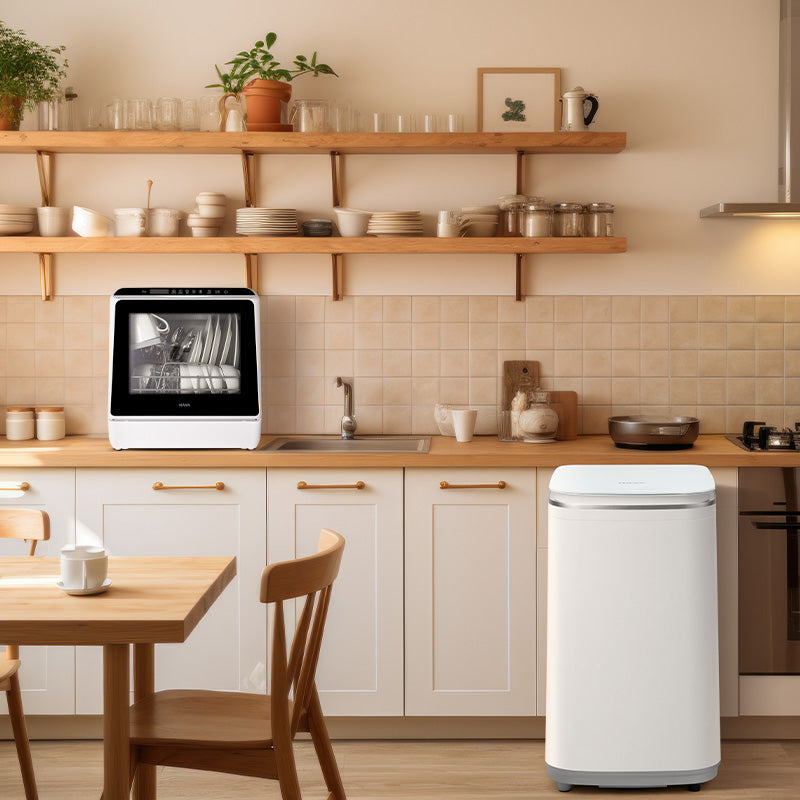
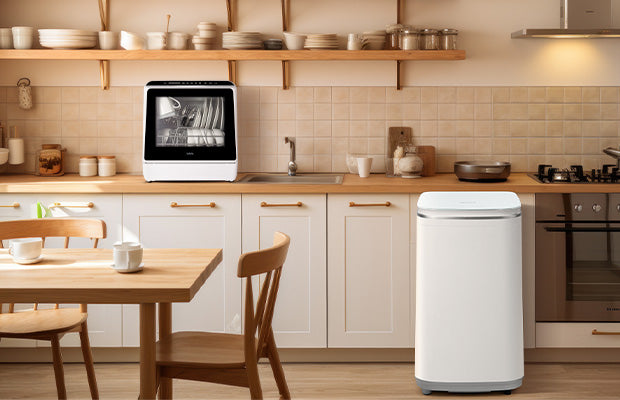
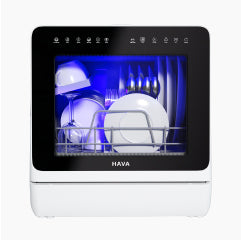
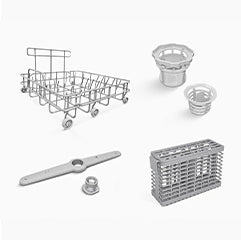
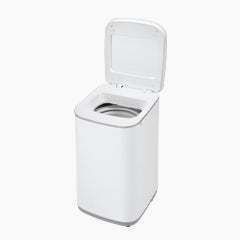
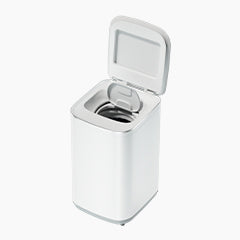
The HAVA R09 countertop dishwasher was developed specifically for this kind of use. With room for 3 place settings, water use of just 5 litres per cycle and a built-in water tank, it can be used flexibly in small kitchens. You'll find a full overview of other models in our comparison of the best countertop dishwashers.
Frequently asked questions
Does a dishwasher really use less water than washing up by hand?
In most cases, yes. A modern built-in dishwasher needs between 10 and 15 litres per cycle, and a countertop dishwasher around 4 to 6 litres. Washing up by hand under a running tap, on the other hand, can use between 30 and 60 litres. Anyone who consistently washes up in a filled bowl can get close to the water use of a dishwasher.
Is washing up by hand more hygienic than a dishwasher?
No, for regular washing-up, a dishwasher usually offers better conditions. Modern machines clean at around 55–75°C depending on the programme and use several cleaning stages. When washing up by hand, the result depends much more on water temperature, technique and how the dishes are dried afterwards.
How much water does a countertop dishwasher use?
A countertop dishwasher needs around 4 to 6 litres of water per cycle, depending on the model. The HAVA R09, for example, manages with 5 litres while offering room for 3 place settings. That makes it particularly well suited to singles, couples and small households.
Is a dishwasher worth it for a single-person household?
A large built-in dishwasher isn't always the best fit for a single-person household, since its capacity often goes unused. A countertop dishwasher is designed specifically for smaller amounts of washing-up and fits more naturally into the daily routine of singles or couples.
Is a dishwasher cheaper than washing up by hand?
It depends a great deal on how you use it. With careful washing up in a filled bowl, costs can end up similar. However, washing frequently under a running tap uses more water and energy, and over the course of a year usually costs more than a dishwasher used efficiently.
Conclusion
Comparing a dishwasher with washing up by hand shows the following: a modern dishwasher is, in most everyday situations, the cheaper and more hygienic option, both in water and energy use and in time. That said, washing up by hand often remains the more practical solution for small amounts of washing-up or one-off needs.
Anyone wanting these benefits in a small household or a kitchen with limited space will find in a countertop dishwasher like the HAVA R09 a solution that can be used in almost any kitchen without needing a fixed water connection.