Finding standing water in your dishwasher after a wash cycle is frustrating, but in many cases it is something you can fix yourself. The most common causes are a blocked filter, a kinked drain hose or a jammed drain pump. In this article, we walk you through how to find the cause, fix the problem and what owners of a countertop dishwasher should pay particular attention to.

Why Is My Dishwasher Not Draining?
When standing water remains in the dishwasher after a wash cycle, there is usually one of four causes: a blocked filter, a jammed drain pump, a kinked or blocked drain hose, or a problem with the drain connection. A technical fault is less common. The most frequent causes can often be resolved without professional help.
Step by Step: What to Do When Your Dishwasher Won't Drain
Before you start troubleshooting, disconnect the dishwasher from the mains. Remove the standing water using a sponge or absorbent cloth so you can inspect the inside of the machine more easily.
Step 1: Check for Blockages Inside the Machine

A blockage inside the machine is one of the most common reasons a dishwasher will not drain properly and should therefore be the first thing to check.
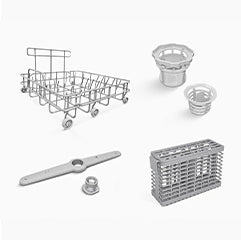
Remove the dish racks and the filter from the bottom of the dishwasher. Rinse the filter under running water and remove any stubborn residue with an old toothbrush.
On many machines, the drain pump is accessible directly beneath the filter. Check this area carefully for foreign objects such as fruit stones, broken glass, small bones or other items that could be jamming the pump impeller. Only open the pump cover if this is permitted by the manufacturer. Remove any visible debris carefully using pliers or a cloth.
Step 2: Check the Drain Hose and Connections

If the inside of the machine is clear and the problem persists, the cause may lie with the drain hose or its connections.
Pull the dishwasher out carefully and inspect the drain hose for kinks, pinches or tight bends. Straighten the hose out where necessary.
Also check the connection between the drain hose and the waste outlet under the sink. This joint is often overlooked, but can narrow over time or become blocked by small pieces of debris. Even a small object such as a button or a piece of plastic can restrict the water flow. Check the connection and carefully clean away any visible deposits with a suitable brush.
Step 3: Try a Forced Drain and Reset
Sometimes the dishwasher is stuck in an error state and simply needs a reset or a manufacturer-specific forced drain cycle.
Many dishwashers have a reset or drain function, though the exact method varies between manufacturers and models. On some machines, you can select a programme and hold down the start button for several seconds to activate the drain cycle. Check the exact button combination in your machine's instruction manual.
If a reset does not help, disconnect the dishwasher from the mains completely. Unplug it and wait a few minutes before reconnecting and running a full wash cycle.
Step 4: Consider a Technical Fault
If none of the previous steps have made any difference, a technical fault may be the cause.
One possibility is a faulty drain pump motor. A sign of this can be the absence of any pump noise during the drain cycle, or unusual sounds coming from the machine. Many modern dishwashers display an error code when there is a drainage problem. For example, error codes E24 or E25 on Bosch and Siemens machines, or F11 on Miele, indicate a water drainage issue. If in doubt, check the instruction manual for your appliance.

In rare cases, a faulty non-return valve or a problem with the control module may be the cause. If you suspect a technical fault, we recommend contacting the manufacturer's customer service and not opening the machine yourself, as this may affect the warranty.
Countertop Dishwasher Not Draining: What to Check
The causes of standing water in a countertop dishwasher are essentially the same as in a built-in model. However, due to the compact design, the integrated water tank and the flexible positioning, there are a few points that deserve particular attention when troubleshooting.
Check the Error Code
If a HAVA countertop dishwasher is not draining, an error code on the display can give you the first clue about the cause. Depending on the model, a drainage problem may point to a blocked drain pump, a fault in the water drainage system or another technical issue. The exact meaning of any code displayed can be found in your appliance's instruction manual. On the HAVA R01 and R09, the error code E2 indicates a drainage problem.
If no error code is shown, move on to checking the filter, drain hose and pump area.
Check the Drain Hose and Height Difference
On countertop dishwashers, the waste water is usually drained through a hose into a sink, a bucket or another outlet. Start by checking whether the hose is kinked, pinched or twisted.
Also pay attention to the height difference between the appliance and the drain. An unfavourable hose route or excessive height differences can put strain on the drain pump and prevent the water from draining fully. Position the drain hose with as few bends as possible and an appropriate route to the drain.

Check the Filter and Pump Area on Compact Machines
The filter on a countertop dishwasher is more compact than on a built-in model and should therefore be checked regularly. Remove the filter and rinse it under running water.
Also check the area beneath the filter for any foreign objects. On compact machines, even small amounts of residue such as food debris or broken glass can be enough to impair drainage performance.
How to Prevent Dishwasher Drainage Problems in Future
A few simple habits can prevent most drainage problems from occurring in the first place.
Scrape Dishes Before Loading
Remove coarse food debris from dishes before loading them. Bones, fruit stones and larger food scraps are frequent causes of blockages in the filter and pump area. A quick scrape over the bin is usually all it takes. Pre-rinsing is not necessary on modern dishwashers, though it may be worthwhile for heavily dried-on or burnt-on residue.
Use the Right Detergent
Only use detergent that has been specifically developed for use in dishwashers. Washing-up liquid and other cleaners produce too much foam and can affect the machine's performance.
Clean the Filter Regularly
Check the filter every few wash cycles and rinse it under running water when needed. A clean filter helps keep the drainage system working reliably. On countertop dishwashers, regular checks are especially important, as compact machines typically have smaller filter systems.
Carry Out Regular Deep Cleans
A monthly deep clean of the interior helps to reduce build-up at an early stage and maintain the machine's performance over time. For a full step-by-step guide on how to clean the filter, spray arms, door seal and interior, see our guide How to Clean a Dishwasher: Step-by-Step Guide.
Frequently Asked Questions About Dishwasher Drainage
Why Won't My Dishwasher Drain?
The most common causes are a blocked filter, a kinked or blocked drain hose, or a foreign object in the pump area. A technical fault with the drain pump is less common, and on many machines this will be indicated by an error code on the display. In many cases, the cause can be identified and fixed without professional help.

What Should I Do If There Is Standing Water in My Dishwasher After a Cycle?
Start by disconnecting the appliance from the mains and removing the standing water with a sponge or absorbent cloth. Then work through the following checks in order: filter and strainer, drain hose, and pump area for any blockages. If that does not help, try a forced drain using the relevant function on your machine. A detailed step-by-step guide can be found earlier in this article.
Can I Fix a Dishwasher That Won't Drain Myself?
In many cases, yes. Blocked filters, kinked hoses or visible foreign objects in the pump area can often be dealt with yourself. However, if the machine displays an error code indicating a drain pump fault – on the HAVA R01 and R09 this is the code E2 – or if all troubleshooting steps have been unsuccessful, we recommend contacting customer service.
Summary
Standing water in your dishwasher sounds like a serious problem, but in many cases it can be resolved quickly without calling a technician. A blocked filter, a kinked drain hose or a foreign object in the pump area are among the most common causes and are usually straightforward to check.
Regular cleaning and maintenance help to prevent drainage problems in the long run. If you are looking for a compact dishwasher with a water tank that requires no fixed plumbing and can be positioned flexibly, a countertop dishwasher is a practical solution for small kitchens, flats or motorhomes.