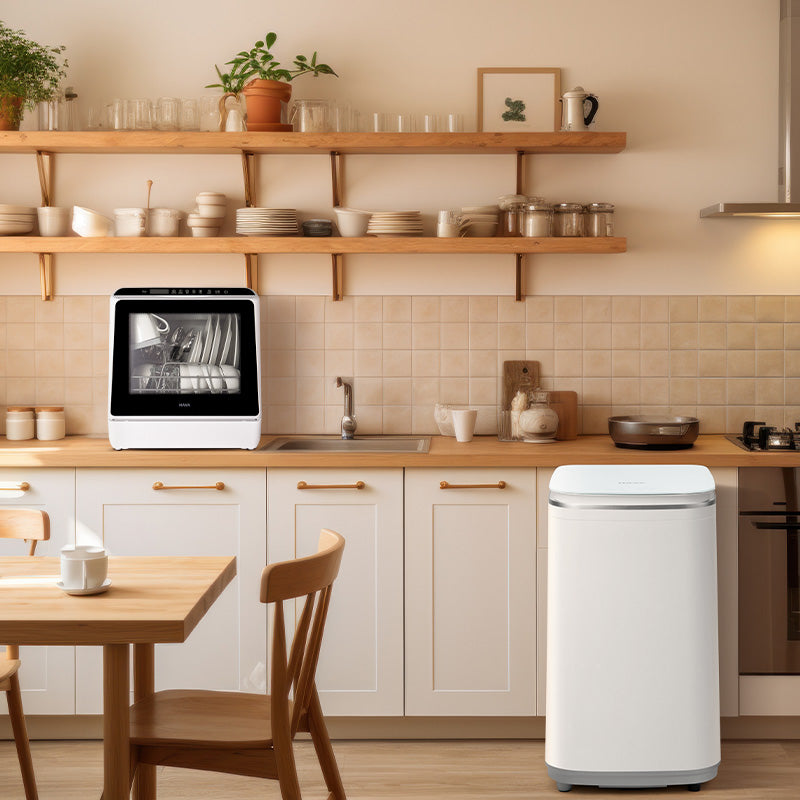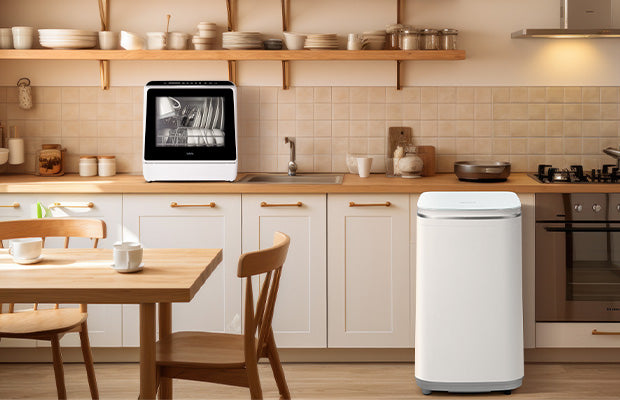
For small kitchens, rented flats or motorhomes, a full-size dishwasher is often not an option. A small dishwasher, sometimes called a mini dishwasher, offers a solution. It is much more compact, often requires no permanent water connection and can fit into a wide range of spaces.
This guide explains how a small dishwasher works, its advantages and disadvantages, and who it is best suited to.
What is a small dishwasher?

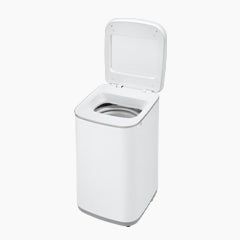
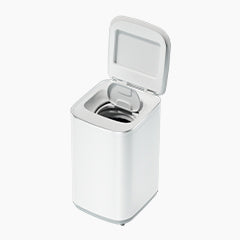
A small dishwasher is a compact version of a conventional dishwasher. It works on the same principle but takes up considerably less space and fits on most kitchen worktops. Most models are around 43 cm wide.
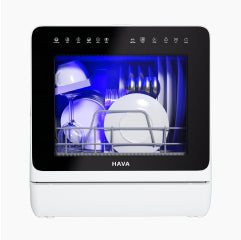
There are two common formats. Small tabletop models with a capacity of two to three place settings often use a water tank that is filled manually. Slightly larger tabletop models with a capacity of six place settings are around 55 cm wide. Depending on the model, they use a water tank or require a permanent water connection. Both differ considerably from a standard 60 cm-wide dishwasher, which usually holds 12 to 14 place settings and is permanently installed in the kitchen.
How does a small dishwasher work?
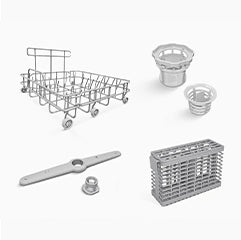
A small dishwasher works in much the same way as a conventional dishwasher, just in a more compact format. Dirty dishes are loaded into the designated baskets. Detergent is then added and a programme selected to suit how dirty the dishes are.
The main difference compared with a built-in model is the water supply. Models with a water tank are filled manually, usually through an opening at the top of the appliance. An audible signal indicates when enough water has been added. Models without a tank connect directly to the tap via an inlet hose. In both cases, wastewater flows through a drain hose into the sink or a bucket.

During the wash cycle, rotating spray arms distribute water and detergent throughout the interior. After washing, many models use an additional drying function so that the dishes can be taken out dry.
Advantages and disadvantages of a small dishwasher
Advantages
A small dishwasher offers several advantages. It takes up much less space than a standard appliance and can be placed on most kitchen worktops. Models with a water tank also require no permanent plumbing connection, making them particularly appealing for rented flats.
Water consumption is another advantage. Depending on the model, a small dishwasher uses around 4 to 6 litres per cycle. A standard appliance typically uses 10 to 15 litres. It can save time too: once the dishwasher has been loaded and the programme started, the cycle runs automatically, leaving you free to get on with other tasks.
Disadvantages
The main disadvantage of a small dishwasher is its limited capacity. Models with two to three place settings cover the daily needs of one or two people but are not sufficient for larger households or families with children.
Interior space is also limited. Large pots, frying pans and baking trays often do not fit, or can only be loaded with difficulty. If you regularly wash these items, a six-place-setting model or a standard dishwasher is a better option.
Many small dishwashers have an energy efficiency rating of E or F, while modern standard appliances often achieve a rating of D or better. If electricity consumption is a priority, compare energy ratings carefully before buying.
Who is a small dishwasher suitable for?
A small dishwasher suits a range of situations where a standard appliance would be too large or not flexible enough.
For people living alone and couples, a small dishwasher is often a practical choice. Two to three place settings are sufficient for everyday needs, and a model with a water tank is easy to take with you when moving home. Our guide to dishwashers for one person explores this in more detail.
A small dishwasher is also suitable for rented flats without an appropriate water connection in the kitchen. As no permanent installation is needed, the appliance can easily be taken to a new home.

A small dishwasher also offers advantages in a motorhome or caravan. Its low weight and modest water consumption suit the space and supply limitations of travelling. Our comparison of the best camping dishwashers highlights models that are particularly suitable.
A small dishwasher can also be useful in office kitchens or staff rooms, for example to keep cups and dishes clean between scheduled cleaning visits.
What should you consider before buying?
Four factors matter most: capacity in place settings, the type of water supply, the width of the appliance and its energy efficiency rating. You can find detailed buying advice and specific models in our comparison of the best mini dishwashers.
Our recommendation: the HAVA R09 small dishwasher
If you are looking for a small dishwasher with a comprehensive range of features, the HAVA R09 is a good option. It offers seven wash programmes, an integrated salt compartment for hard-water areas, a child lock and a delay start of up to 18 hours. Its D energy rating also places it among the more energy-efficient models in this appliance category.
The following video shows how the HAVA R09 performs in everyday use.
User reviews also highlight its cleaning performance. Dishes come out thoroughly clean, even when heavily soiled.
Frequently asked questions
Is a small dishwasher worth it?
For people living alone, couples or rented flats without a permanent water connection, a small dishwasher is usually worthwhile. It saves water and time compared with washing up by hand while taking up much less space than a standard appliance. For households of more than three people, a standard dishwasher or a six-place-setting model is usually a better fit.
How much does a small dishwasher cost?
Prices for a small dishwasher typically range from €230 to €320. Basic two-place-setting models are available from around €250. Appliances with more features, such as an integrated salt compartment or additional programmes, tend to cost around €300. Six-place-setting models with a permanent water connection fall within a similar price range.
How much water does a small dishwasher save?
Depending on the model, a small dishwasher uses around 4 to 6 litres of water per cycle. Washing up by hand under a running tap can use 30 to 60 litres. Our guide to dishwasher water consumption provides a detailed breakdown by model and programme.
Does a small dishwasher need a water connection?
Not necessarily. Models with an integrated water tank work without a permanent water connection and are filled manually. Other models, particularly larger six-place-setting appliances, require a permanent connection to the tap.
Conclusion
A small dishwasher is a space-saving, flexible alternative to a standard appliance. It is particularly suitable for people living alone, couples, rented flats without a permanent water connection and use in a motorhome.
If you want to compare individual models, you can find more information in our comparison of the best mini dishwashers. For anyone looking for a small dishwasher with a comprehensive range of features, the HAVA R09 is a good option.